
Watermarks on Brazilian Stamps
The following study was originally published by the author in 2024 as part of his Portuguese-language series, "Estudos Sobre os Selos do Brazil" (Studies of the Stamps of Brazil). Translated and re-published here by the Brazil Philatelic Association with the author's kind consent.
This study has the most complete listing of Brazilian watermarks of which we are aware. The letter designation for each watermark is based on those used in the RHM Catálogo de Selos do Brazil -- and builds on that listing with previously unavailable watermark images. Where applicable, we have added the watermark numbers used in the Scott Catalog and/or Michel Catalog for ease of cross-referencing.
Watermarks have been an integral part of the papermaking process for many centuries. When paper was made by hand, a twisted wire—shaped into a specific design—was placed within the water-rich paper pulp. When the mixture was pressed, the water drained away, and the wire left an impression on the paper, leaving a distinct mark on the resulting sheet.
Today, watermarks are imprinted by machines directly onto the paper while it is still damp. The mark becomes visible when the paper is held up against a light source. They serve as a security feature, designed to make the counterfeiting of the paper containing them significantly more difficult.
The origins of watermarked paper date back to the 13th century in Italy, where the first examples of this type of paper began to be produced. Italian papermakers developed techniques to incorporate watermarks during the manufacturing process—initially with the aim of identifying the mills that produced the paper and distinguishing the quality of the product.
Over the following centuries, the use of watermarked paper spread throughout Europe, becoming a common feature of official documents. Governments and merchants utilized watermarks to authenticate their papers and prevent counterfeiting. In the medieval era, the production of watermarked paper was considered an art form, and the watermarks themselves featured elaborate figures, religious symbols, coats of arms, and even scenes from daily life.
The history of watermarked paper is intimately linked to the evolution of papermaking itself. As manufacturing techniques advanced, watermarks became increasingly complex and diverse. During the Renaissance, for instance, watermarks evolved into symbols of prestige, and many of the finest papermakers became renowned for their elaborate watermark designs.
In the 18th century, watermarked paper came to be widely used for official and financial documents—such as banknotes and contracts—due to its ability to hinder counterfeiting. During this era, governments in various countries adopted watermarked paper as a security measure, a practice that continues to this day.The evolution of watermarked paper stands as a testament to the development of the paper industry and security techniques. Today, it is produced on an industrial scale, yet it still retains elements of the art and craftsmanship of the early paper makers.
Watermarked paper has been utilized since the very inception of postage stamps. The famous Penny Black of 1840, along with all British stamp issues up until 1967, feature watermarks. The United States printed stamps on watermarked paper from 1894 to 1915; the paper bore the letters "USPS," appearing in two distinct styles: single-line and double-line.
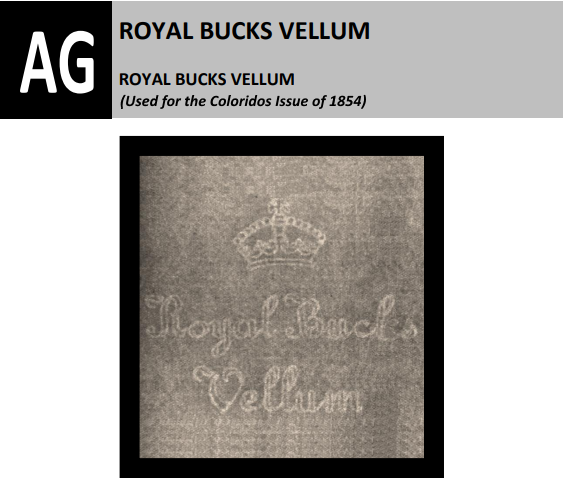
In Brazil, the first instance of watermarks appearing in paper used for stamp printing is observed in the 1843 "Bull's Eye" (Olho de Boi) issue, which features "suture watermarks" (marks resulting from the stitching used to join the felt backing that was used during the paper-making process). In 1854, the Colorido (Colored) series" marked the first appearance of watermarks derived from English-made paper (specifically, *Royal Bucks Vellum*). However, the practice of incorporating watermarks into stamps did not become a consistent standard for Brazil’s Postal Service until after the Proclamation of the Republic—more precisely, from the year 1900 onward. Currently, due to the complexities involved in their manufacture and their high production costs, watermarks are used only sporadically in stamp issues of particular philatelic or postal-historical significance.
Other countries have utilized crowns, stars, and even images of animals as watermarks. Stamp catalogs illustrate the main watermark designs, and within them, one can determine which stamps are expected to exhibit this characteristic. We should not expect to find watermarks on every stamp ever issued; only a few countries, and only for limited periods, printed stamps on paper featuring these characteristics. The study of watermarks can, at times, be financially rewarding — particularly if you are able to identify stamps that, for one reason or another, either possess or lack a watermark when the expected situation would be the reverse.
If you are unable to discern a watermark by holding a stamp against a strong light source, the alternative method involves using a fluid—specifically benzine. This is a highly volatile chemical substance that, when applied to a stamp, dampens it for a very brief period—just long enough to reveal or highlight the desired watermark—before quickly evaporating. A few well-placed drops of the fluid are all that is required; there is no need to submerge the entire stamp in the solution. A few drops are all we need. Small black plastic trays designed specifically for this purpose are available at philatelic supply stores, though any black object capable of providing sufficient contrast may be used instead.
There are various mechanical devices available on the market for detecting watermarks. Most of these devices utilize a concentrated light source focused directly onto the stamp, which is, in turn, pressed firmly against a viewing screen. Some mechanical watermark detectors can be quite expensive. Most philatelic experts rely on a combination of tools: fluid, mechanical equipment, good lighting, and expertise in the art of identifying watermarks.
We can categorize the watermarks — specifically the manufacturers and paper-making techniques — originally utilized in Brazilian philately as follows:
| Papers intended for use with fiscal stamps and postage stamps: | B, BA, D, E, F, F-1, G, L, and O-1 . |
| Papers intended for postage stamps: | A, C, F-0, H, I, J, K, M, N, O, P, and Q. |
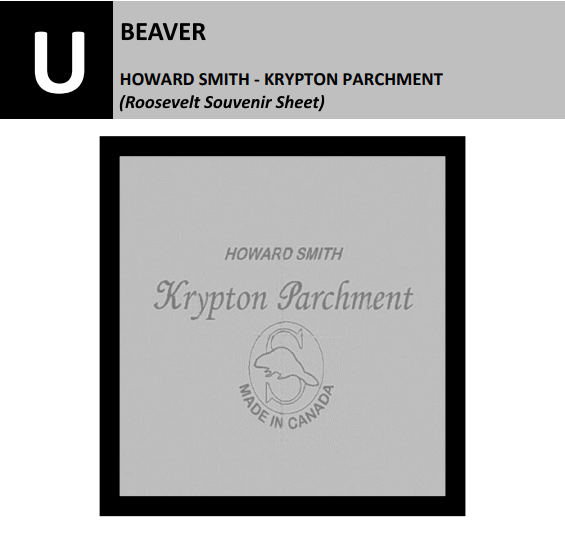
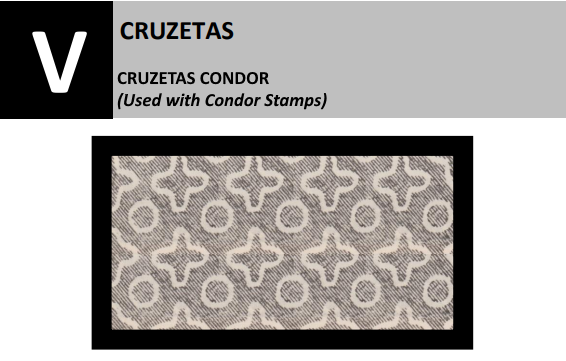
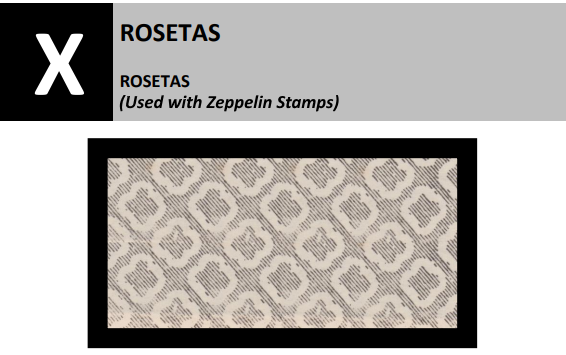
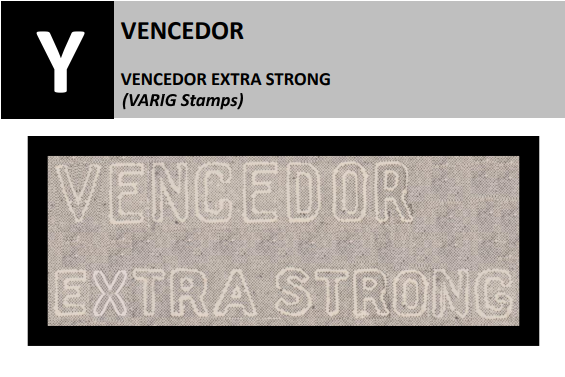
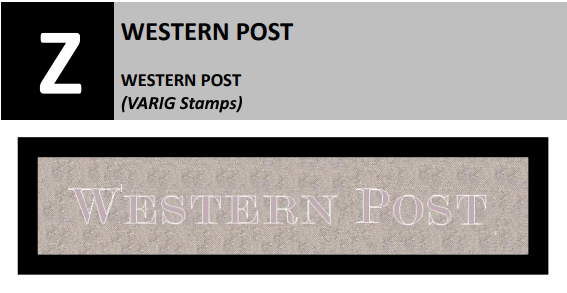
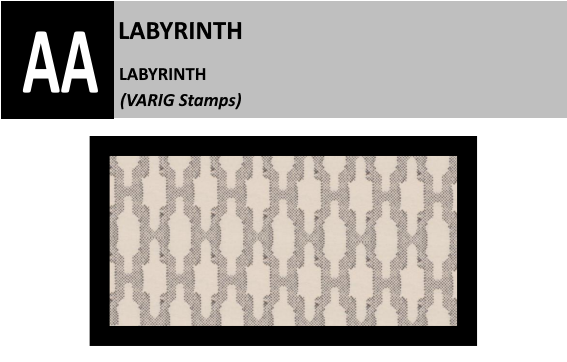
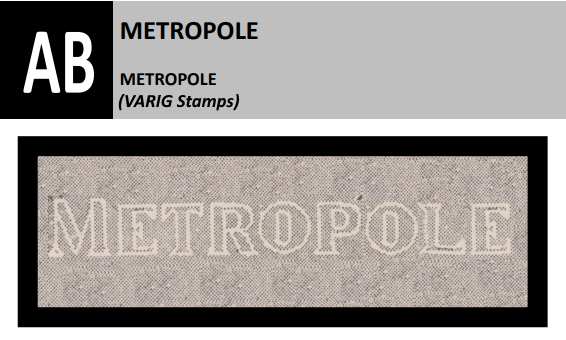
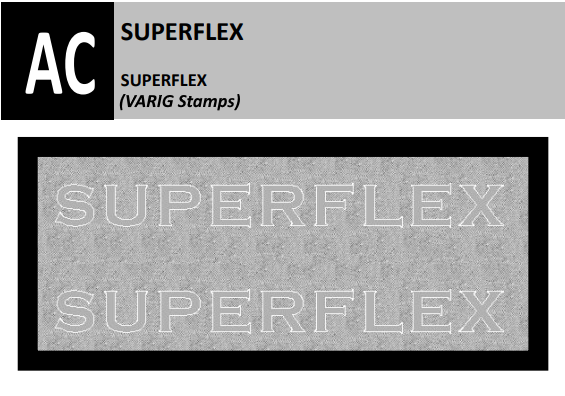
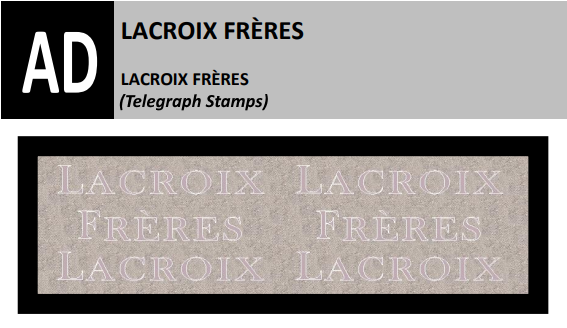
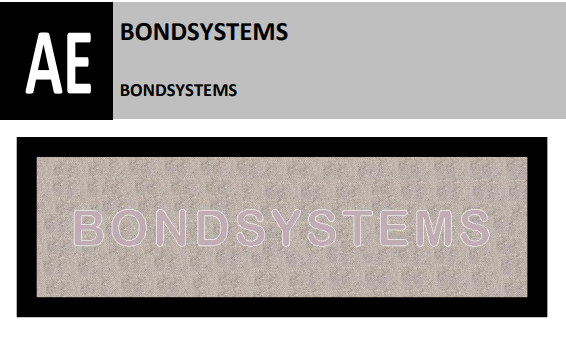
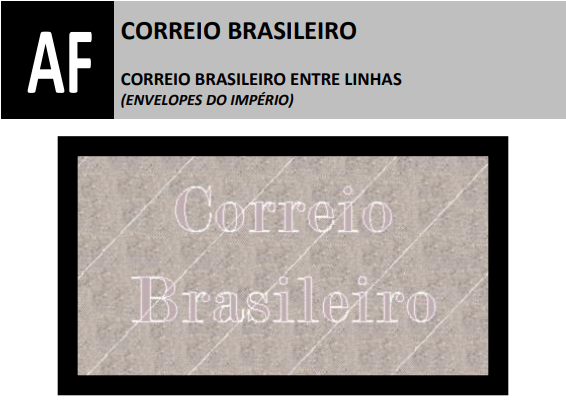
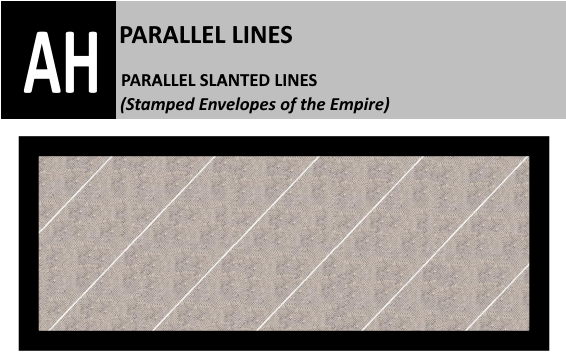
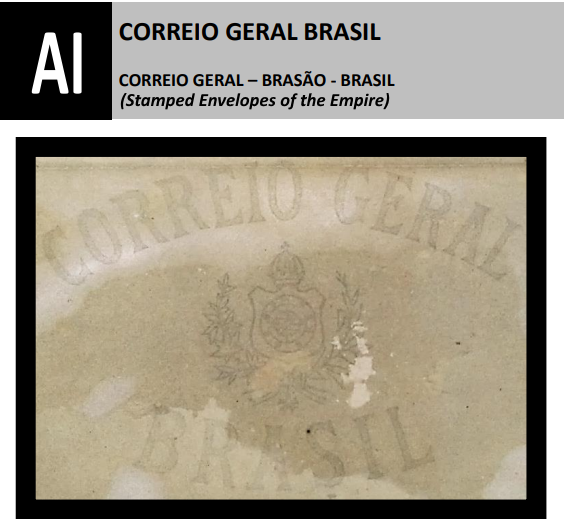
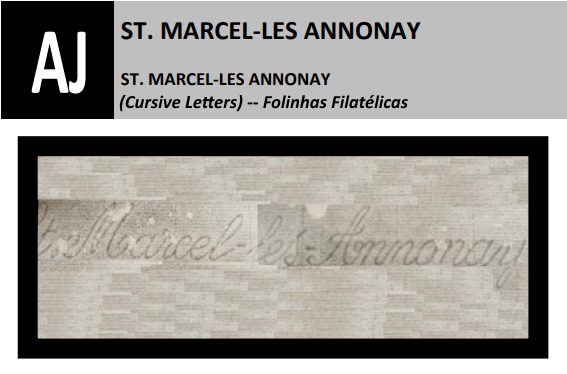
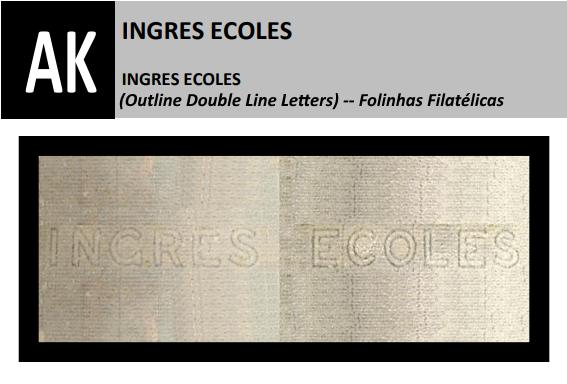
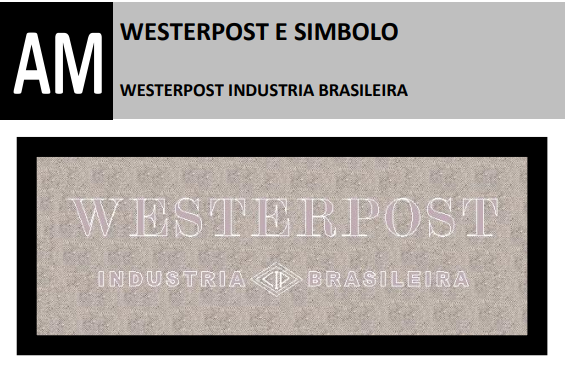
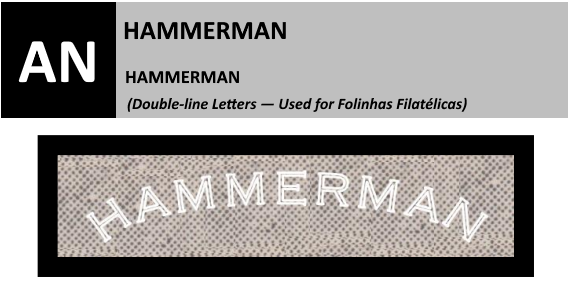
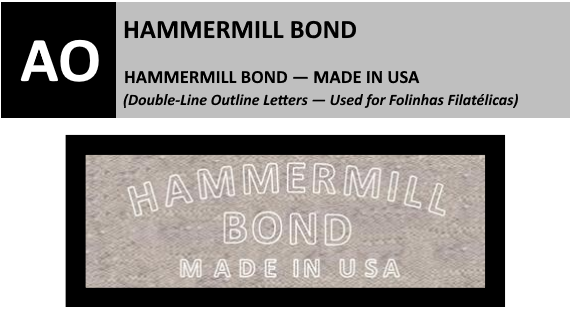
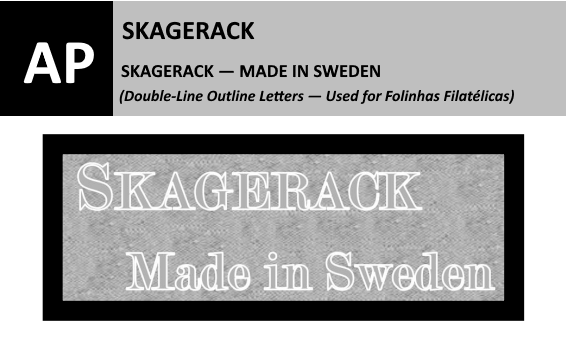
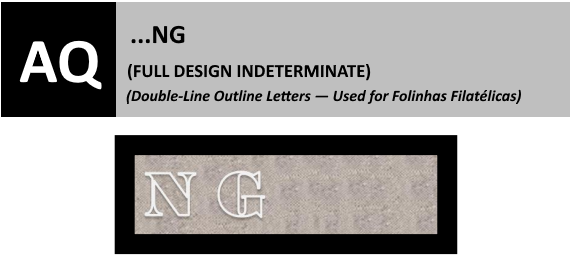
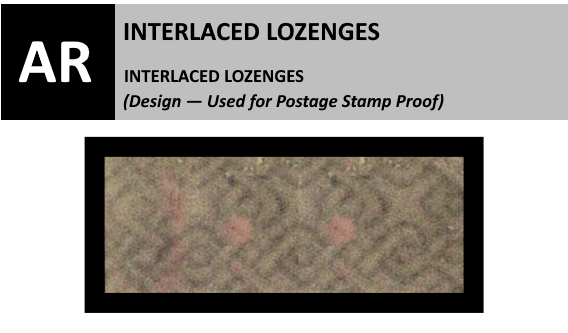
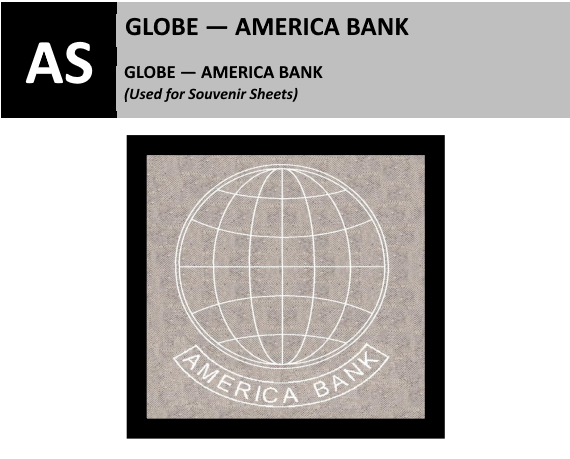
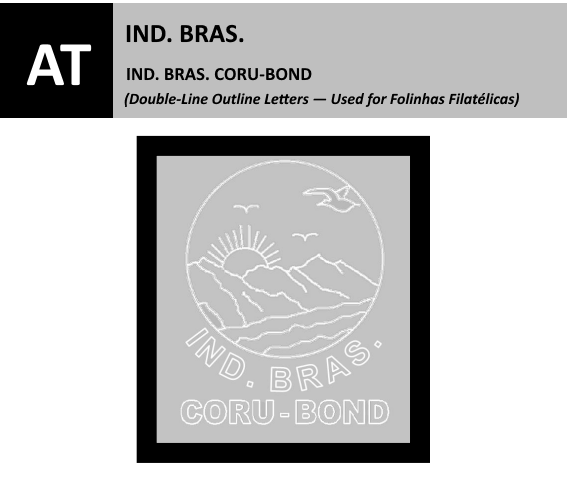
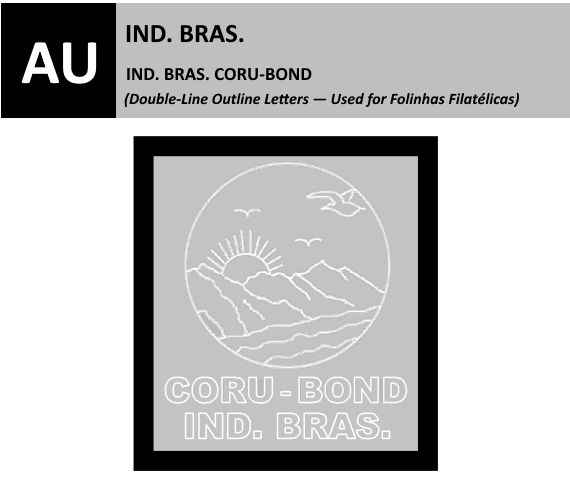
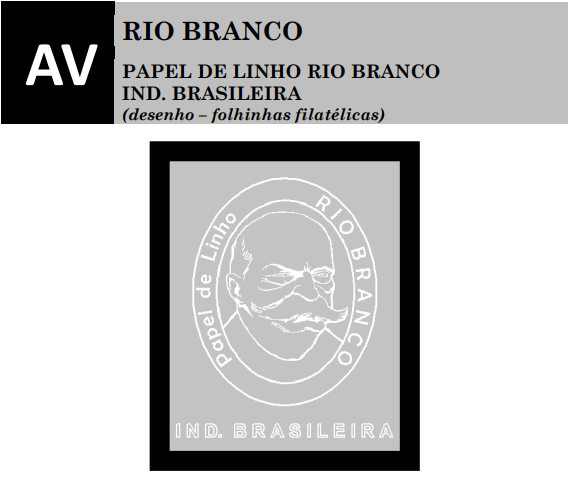
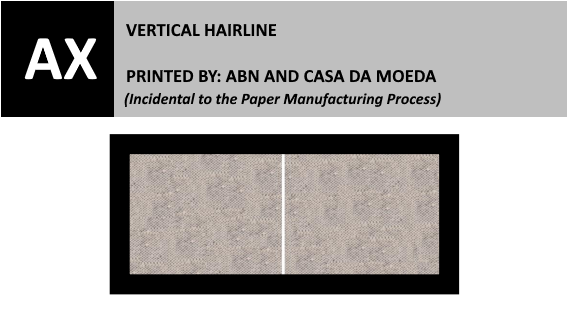
| Papers featuring manufacturers' watermarks: | R, S, T, U, V, X, Y, Z, AA, AB, AC, AD, AE, AF, AG, AH, AI, AJ, AK, AL, AM, AN, AO, AP, AQ, AR, AS, AT, AU, AV, and AX. |
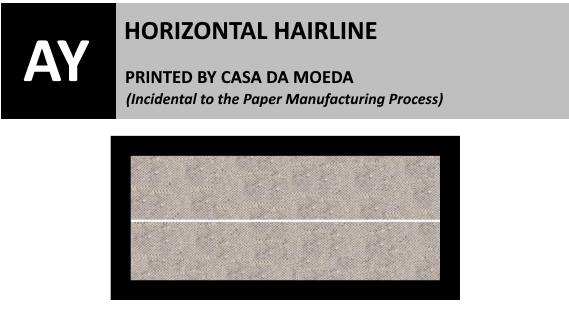
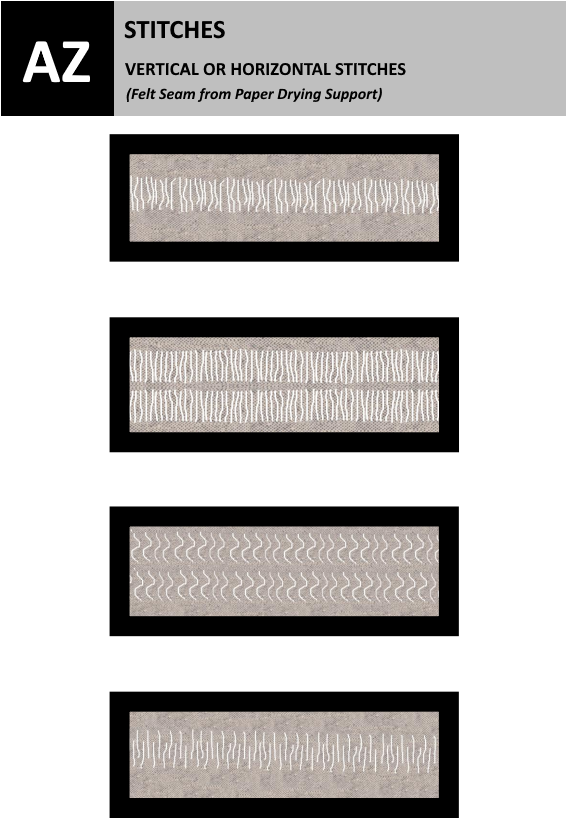
| Papers featuring watermarks related to the paper-making process: | AW, AY, and AZ. |
This classification originally followed existing historical classifications while incorporating new information intended to be of further assistance to philatelists. We wish to emphasize that the images presented here were derived directly from the philatelic items themselves; in instances where the original was unavailable, a reconstructed drawing was used, though every effort was made to ensure it accurately reflected the original design. The dimensions provided do not necessarily correspond to the original physical dimensions, given that many watermarks occupied a much larger area than the printed items themselves (see example: Watermark L, "Coat of Arms"). Consequently, we opted to present the images in a reduced scale where necessary.
Another important point to note is that, until the 1940s, many of the philatelic souvenir cards (known as folhinhas) placed in circulation in Brazil required official authorization from the Postal Service (DCT—Department of Posts and Telegraphs) prior to publication. In the vast majority of cases, however, the Postal Service's mandate was disregarded; consequently, publishers of private issues frequently failed to request the requisite authorization. This situation began to change in the 1950s, when the DCT prohibited the inclusion of the acronym "DCT" on private folinha issues and shifted the responsibility for authorizing such publications to political authorities—whether federal, state, or municipal. This practice was short-lived, however; by the mid-1950s, the entities sponsoring these folinhas had once again ceased requesting the necessary authorization for their publication. This lack of regulatory oversight resulted in a massive volume of publications, leading to the use of a wide variety of paper types—and, concomitantly, a profusion of watermarks.
We must also clarify that, since the sheets of paper used for printing—as well as the *folhinhas* themselves—varied in dimension, it is entirely plausible that not every *folhinha* will necessarily bear a watermark. This makes it difficult to determine which items were genuinely printed on watermarked paper and which were not. Under the classification system adopted here, any item bearing a watermark was prioritized and classified accordingly, to the exclusion of those that did not.
Consequently, what we present here represents only a minuscule fraction of the material likely available to scholars for the purpose of classifying these watermarks. We do not intend to conclude this study at this juncture; rather, it remains open to any new additions, deletions, or modifications that may prove necessary. We hereby extend an invitation to all interested scholars.

Scott 97 Michel Wz. 1
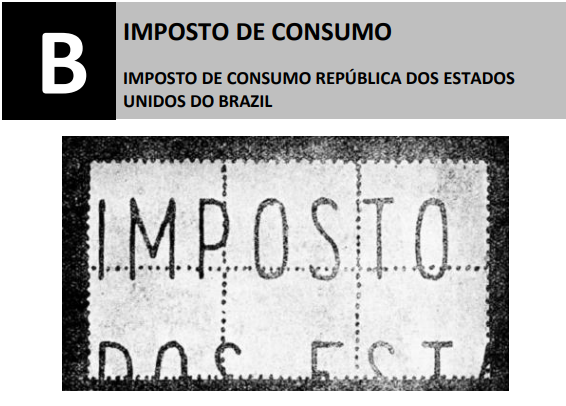
Scott 98 Michel Wz. 2
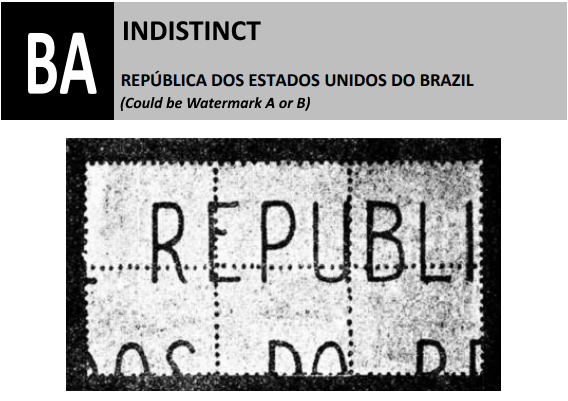
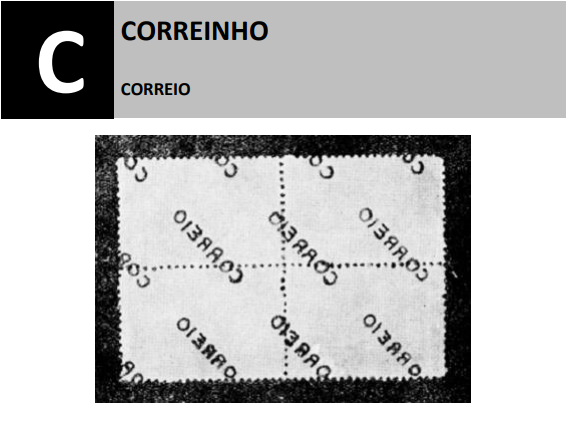
Scott 99 Michel Wz. 3
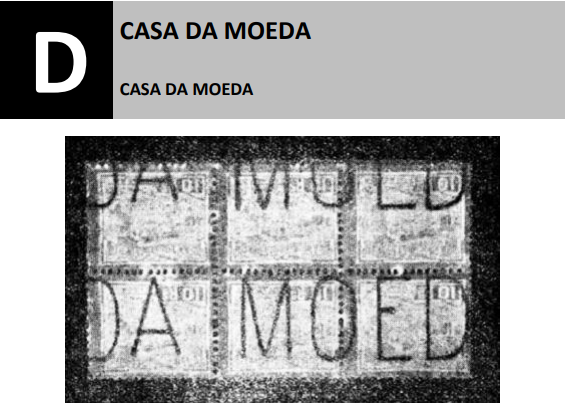
Scott 100 Michel Wz. 4
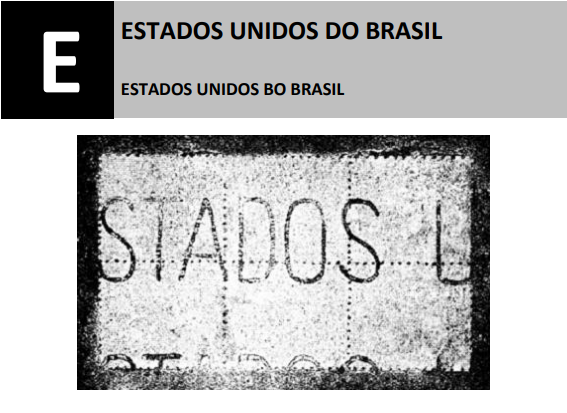
Scott 193 Michel Wz. 5
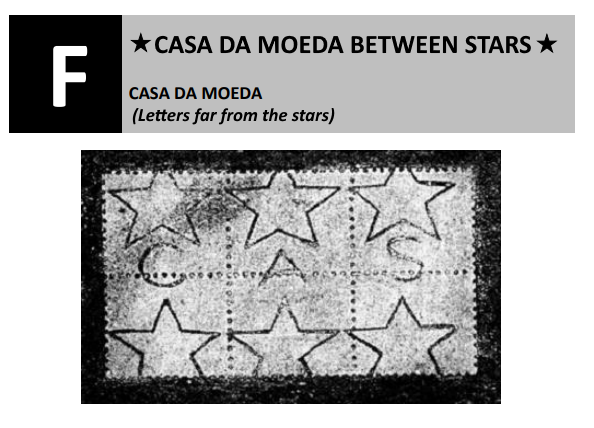
Scott 101 Michel Wz. 6
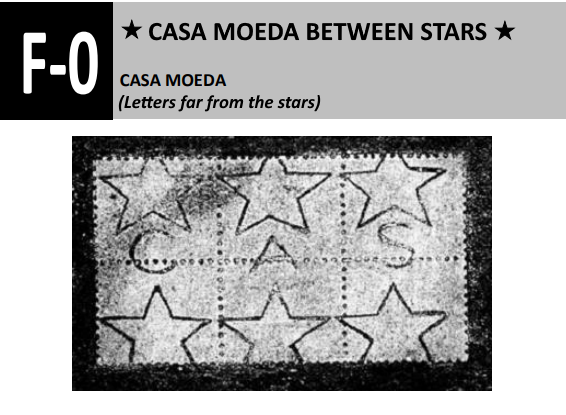
Scott 101 Michel Wz. 6
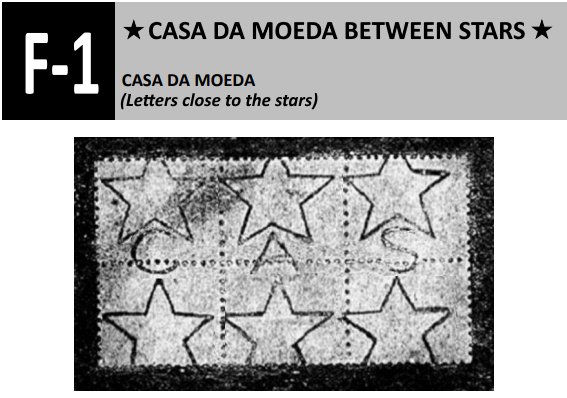
Scott 101 Michel Wz. 6
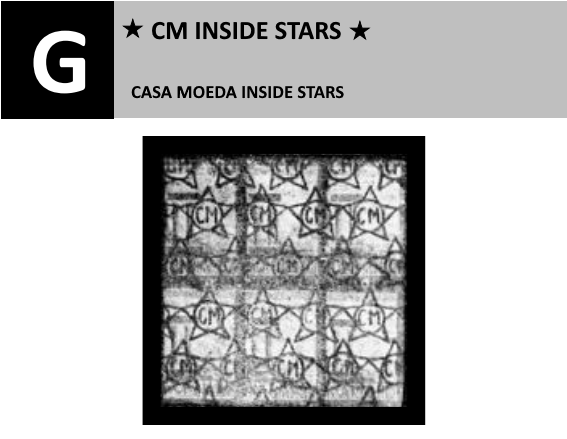
Scott 206 Michel Wz. 7
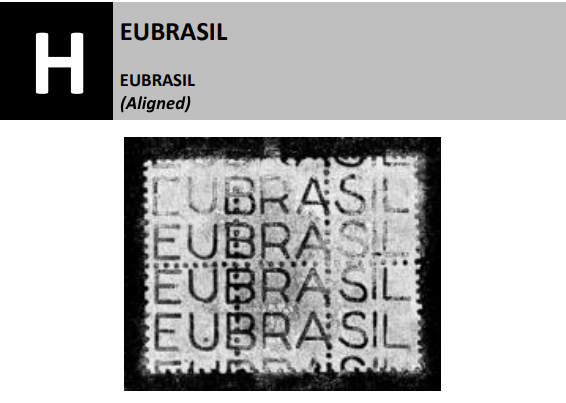
Scott 218 Michel Wz. 8 X

Michel Wz. 8 Y
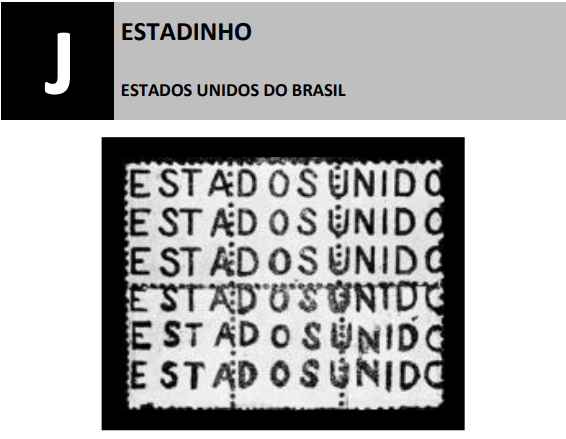
Scot 221 Michel Wz. 9

Scott 222 Michel Wz. 10
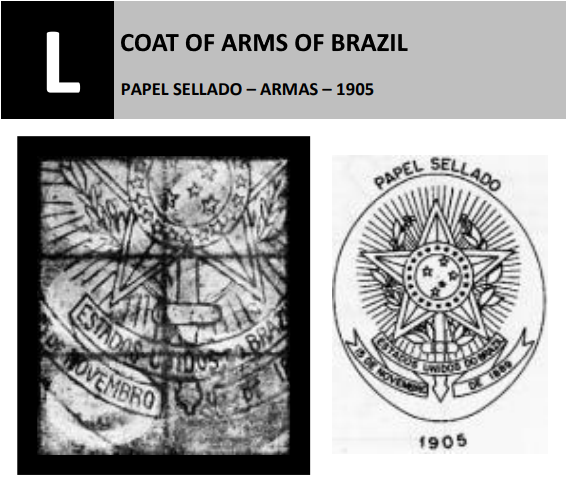
Scott 236 MIchel Wz. 11
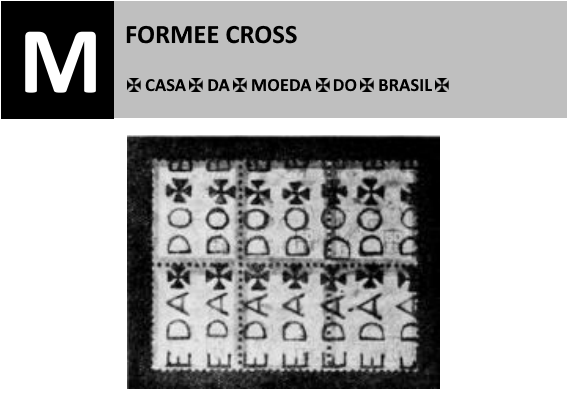
Scott 245 Michel Wz. 12

Scott 249 Michel Wz. 13
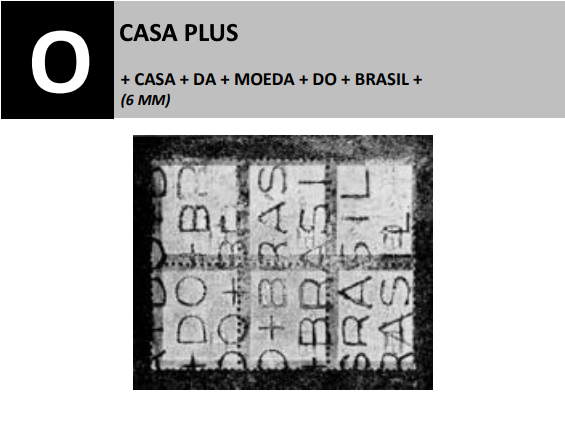
Scott 256 Michel Wz. 14
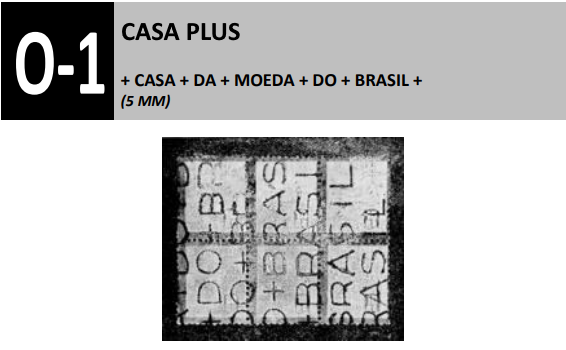
Scott 268 Michel Wz. 17
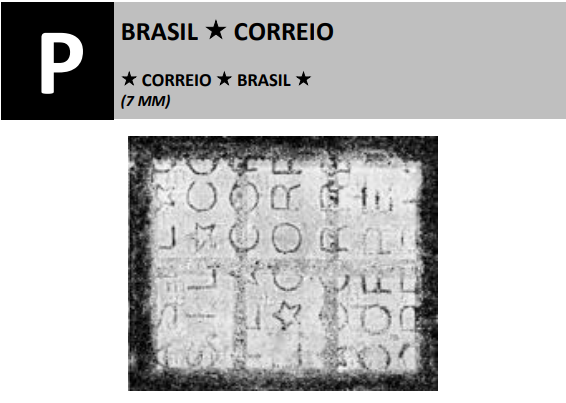
Scott 264 Michel Wz. 15
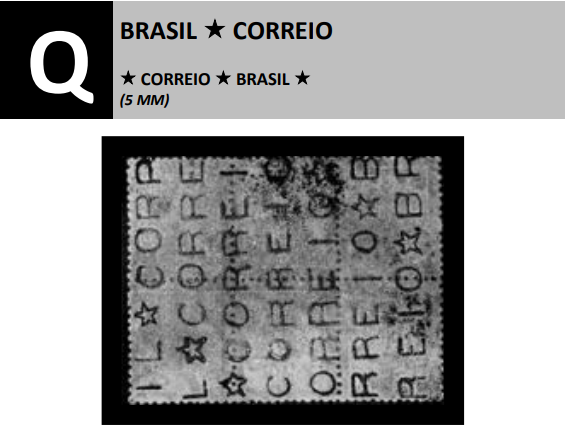
Scott 267 MIchel Wz. 16
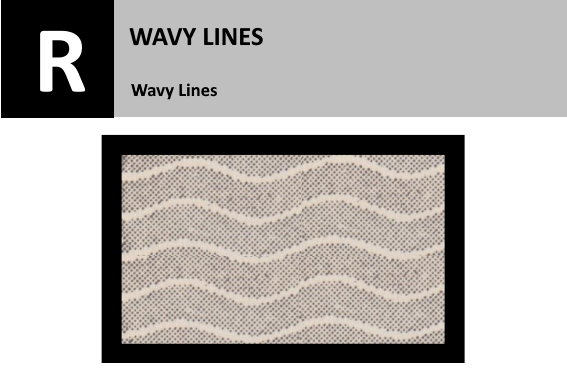
Scott 281 Michel Wz. 20
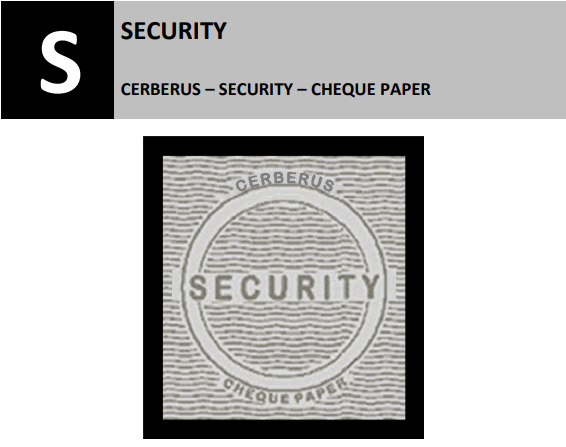
Scott 270 Michel Wz. 18
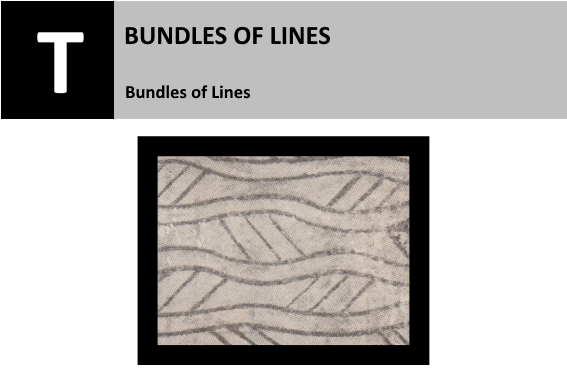
Scott 271 Michel Wz. 19

Bibliography
BALUD, Rubens. Verificar Filigrana em Selos Postais. Filatelia Clássica. http://www.clubefilatelicodobrasil.com.br/artigos/atecnicos/filigranas.htm.
CATÁLOGO DOS SELOS DO BRASIL,” Único” – As Filigranas dos Sêlos Brasileiros. Separata n°1. Roberto Aniche Filatelia. Blog de Filatelia, Colecionismo e Orientação. jan. 2022. p. 23. pdf. https://robertoanichefilatelia.files.wordpress.com/2020/04/catalogo-unico-10- de-abr-de-2020_compressed.
JAVARONI, Marcio. Filigranas dos Selos Brasileiros. Roberto Aniche Filatelia. Blog de Filatelia, Colecionismo e Orientação. jan. 2022. p. 3. pdf https://robertoanichefilatelia.files.wordpress.com/2019/03/filigranas-cartc3b5es
MARCOS, Adalberto. Compêndio da Filatelia. Editora de Publicações Culturais e Cientificas – Revista Filatélica Brasileira. Graficas J. Bignardi & Cia Ltda. 1968. São Paulo, SP. p. 170.
PORTO JÚNIOR, Rubem. Você sabe o que são Filigranas. http://www.clubefilatelicodobrasil.com.br/artigos/atecnicos/filigranas.htm
PROTZNER, Marcio H. de O. A Posição das Filigranas. p.16.
R.H.M. Filatelistas. Filigrana “CASA + DA+ MOEDA + DO + BRASIL. Artigo 03. Set 2020. https://www.oselo.com.br/publicacao/artigo-03-filigrana-casa-da-moeda-do-brasil/.
_________________. 1940 – A Série dos Blocos da Feira Mundial de Nova York. https://www.oselo.com.br/produto/1940-serie-dos-blocos-da-feira-mundial-de-nycom-filigrana-globo-k3759/
ROQUE, Claudio e Guilherme Saliés. Filigrana. Roberto Aniche Filatelia. Blog de Filatelia, Colecionismo e Orientação. jan. 2024, p. 9. pdf. https://robertoanichefilatelia.files.wordpress.com/2021/02/claudio-roque-eguilherme-salies-filigranas-do-brasil.docx.
SCHIERZ, Ulrich. Pequeno Dicionário Filatélico. pdf. p. 120. https://filabras.org/images/articles/591.
